
HAIR LOSS TREATMENT PERTH
HAIR LOSS IN MEN & WOMEN
Hair loss can occur for many reasons and may affect men and women differently. At Navin Clinic, Dr Navin Menon provides medical assessment of hair loss to help identify the likely cause and discuss appropriate management options.
WHAT CAUSES HAIR LOSS?
Hair loss is not a single condition. Establishing the likely cause is an important first step before considering treatment
-
Genetically influenced progressive hair thinning affecting both men and women.
-
Increased shedding that may occur following illness, physiological stress, nutritional changes or other triggers.
-
An autoimmune form of hair loss that commonly causes discrete areas of hair loss.
-
Inflammatory or other scalp disorders can sometimes contribute to hair loss.
-
Underlying medical conditions, medications and nutritional deficiencies may contribute in selected patients- Iron Deficiency Anaemia , Thyroid Disorders.
-
Some inflammatory conditions can permanently damage hair follicles and require appropriate medical assessment.
HAIR LOSS ASSESSMENT
Effective management begins with establishing the likely cause and pattern of hair loss.
01 HISTORY → 02 SCALP & HAIR EXAMINATION → 03 DIAGNOSIS → 04 MANAGEMENT PLAN
Your assessment may include the history and progression of your hair loss, family history, medical conditions and medications, examination of the scalp and hair, assessment of hair-loss distribution and donor hair, and further investigations where clinically indicated.
TREATMENT OPTIONS
Treatment for hair loss depends on the underlying diagnosis, pattern and progression of hair loss, medical history and individual treatment goals.
Following assessment, Dr Navin Menon will discuss management options that may be appropriate for you. These may include medical management, strategies to preserve existing hair and, in appropriately selected patients, consideration of hair transplantation.
Treatment recommendations are individualised following clinical assessment.
WHEN MIGHT HAIR TRANSPLNATATION BE CONSIDERED
Hair transplantation may be considered for appropriately selected patients with suitable donor hair and a and a pattern of hair loss that is appropriate for transplantation.
Suitability depends on several factors, including the cause and extent of hair loss, donor-hair characteristics, age, progression of hair loss and treatment goals.
Hair transplantation does not prevent ongoing loss of non-transplanted hair, so longer-term management of hair loss may also need to be considered.
FREQUENTLY ASKED QUESTIONS ON HAIR LOSS
-
Hair loss has many possible causes, including genetic pattern hair loss, increased shedding, medical conditions, medications, nutritional factors and inflammatory scalp disorders. Assessment helps determine the likely cause.
-
Genetics play an important role in male pattern hair loss, although the age of onset, pattern and rate of progression vary considerably between individuals.
-
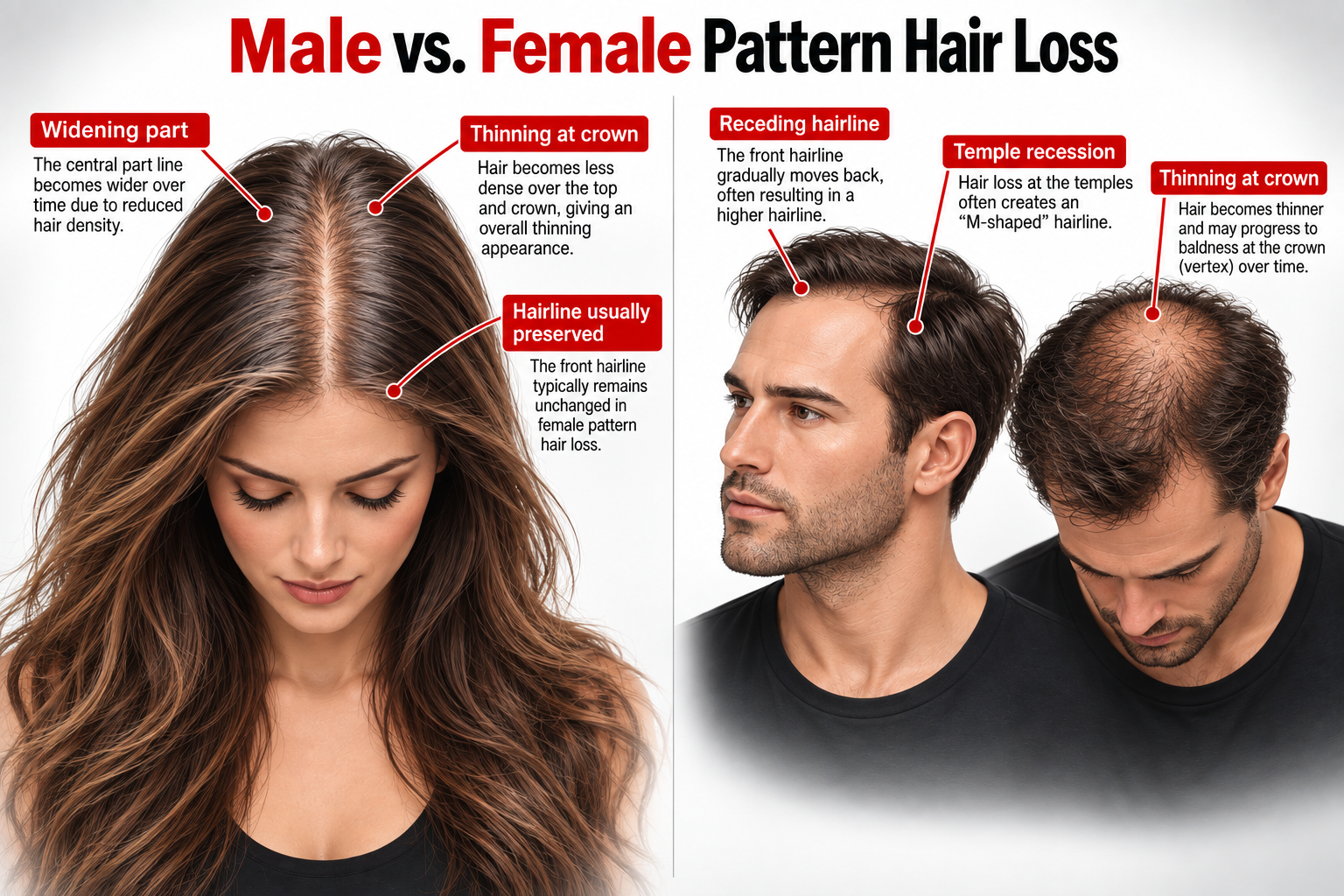
Often, yes. Women more commonly develop progressive thinning across the central scalp, while men more commonly develop recession of the hairline, temples and/or crown.
-
Not everyone requires blood tests. Investigations may be considered where the history or examination suggests an underlying medical or nutritional contributor.
-
Depending on the diagnosis, non-surgical management may be appropriate. Treatment options are discussed following individual medical assessment.
-
Suitability depends on the cause and stability of your hair loss, donor-hair availability, scalp characteristics, expectations and longer-term pattern of hair loss.
-
Hair-loss assessment may be appropriate if you notice progressive thinning, increased shedding, patchy hair loss, changes to the scalp or a change in your usual hair-growth pattern. Earlier assessment may help identify the likely cause and determine whether further investigation or management is appropriate.
CONCERNED ABOUT HAIR LOSS
Start with a medical assessment to understand the likely cause of your hair loss and the management options that may be appropriate for you.
NAVIN CLINIC
Unit 3, First Floor
41A Kirwan Street
Floreat WA 6014
UNDERSTANDING HAIR LOSS
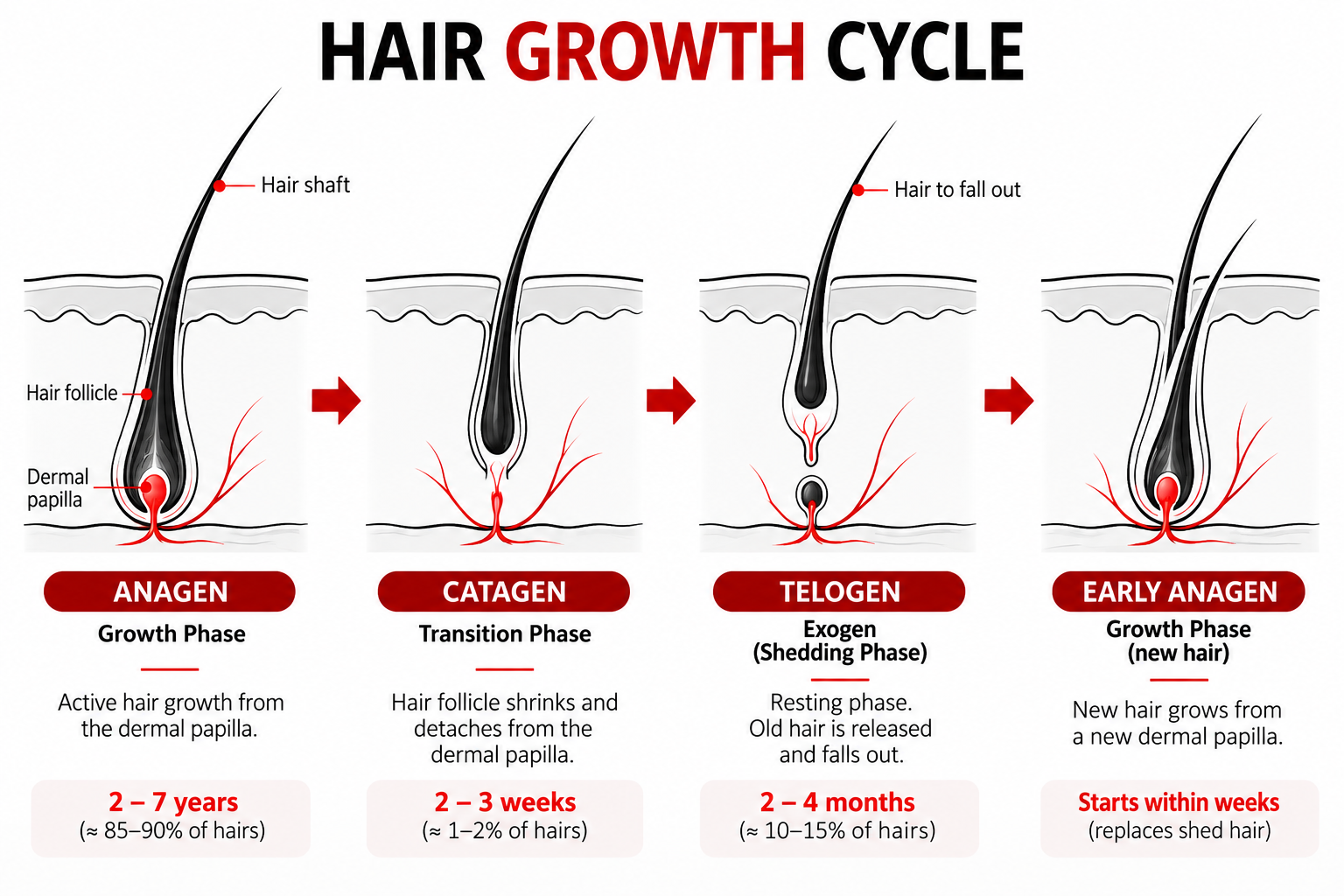
Hair normally cycles through phases of active growth, transition and rest. Hair shedding is therefore a normal biological process. Hair loss becomes clinically significant when the balance between growth and shedding changes, or when follicles progressively miniaturise.
MALE and female pattern hair loss
Pattern hair loss is one of the most common causes of progressive hair thinning. In men, it commonly affects the frontal hairline, temples and crown. In women, it more commonly produces diffuse thinning over the central scalp while the frontal hairline may remain relatively preserved.