
Dr Navin Menon
MBBS, MRCGP, FRACGP
General Practitioner | General Registration
AHPRA MED0001972102
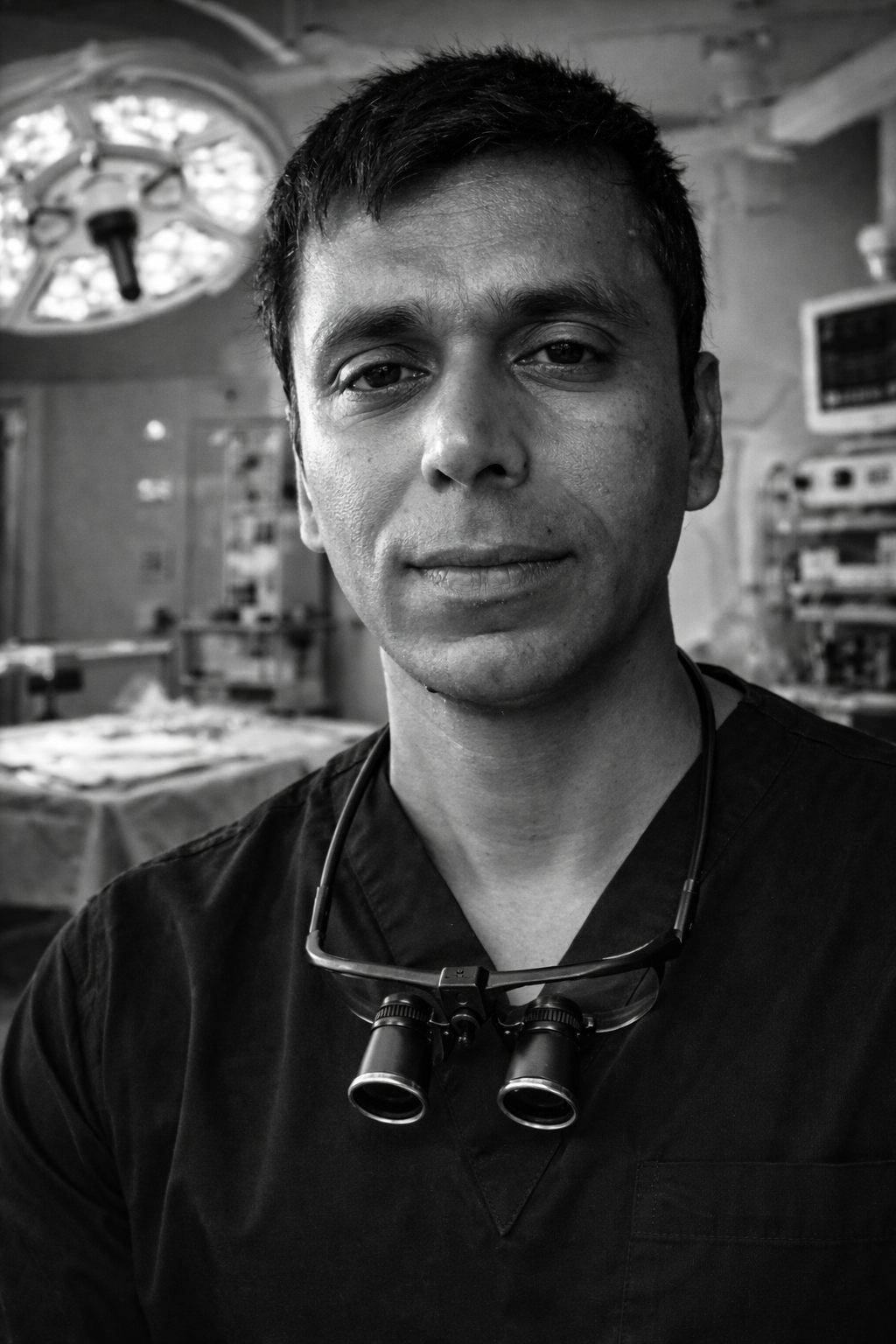
Dr Navin Menon is a General Practitioner with an interest in hair restoration and skin cancer surgery.
He graduated from the Armed Forces Medical College (AFMC), India. He completed the Membership of the Royal College of General Practitioners (MRCGP) in London and, after relocating to Australia, attained Fellowship of the Royal Australian College of General Practitioners (FRACGP). At Navin Clinic he offers skin cancer surgery - grafts, flaps, wedge resections etc.
Dr Menon has undertaken additional training in Follicular Unit Extraction (FUE) hair transplantation, including hands-on training at the Serkan Aydin Hair Transplant Clinic in Istanbul, Turkey.
Outside medicine, Dr Menon practises Krav Maga and Bikram Yoga.
FUE Hair Transplantation in Floreat, Perth
Doctor-led assessment, individual hairline planning and FUE hair transplantation with ongoing post-operative care.
Transparent pricing from $2,500
HAIR TRANSPLANTATION PERTH
41 A KIRWAN ST , FLOREAT , PERTH
WHAT IS FUE HAIR TRANSPLANTATION?
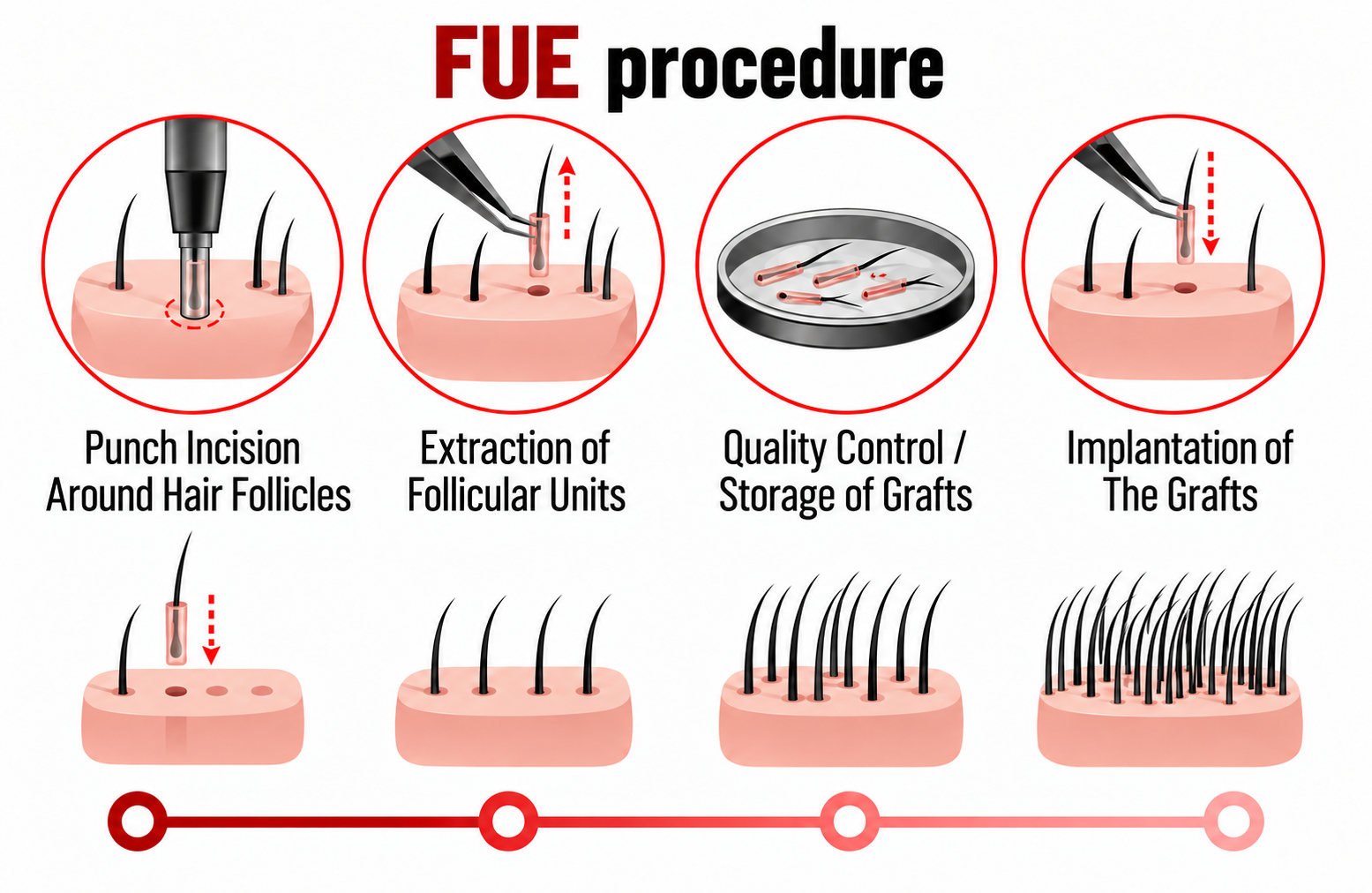
Follicular Unit Extraction (FUE) involves individually extracting naturally occurring follicular units from a suitable donor area, usually at the back and sides of the scalp.
The grafts are carefully prepared and subsequently implanted into the planned recipient area.
Because follicles are extracted individually, FUE does not require removal of a linear strip of scalp.
YOUR HAIR TRANSPLANT JOURNEY
-
Telehealth
Your journey begins with an online consultation to understand your hair loss, your concerns and what you would like to achieve.
During this consultation we discuss:
Your hair-loss history, goals and concerns
Facial framing and potential hairline design
Your medical history and factors that may influence hair loss
Medical treatment options that may help optimise hair growth and minimise further hair loss
Whether FUE hair transplantation may be an appropriate option for you
-
Your assessment includes:
Clinical examination of your hair and scalp
Detailed hairline planning and design
Assessment of the donor area, including hair density and characteristics
Assessment of the recipient area
Estimation of the number of follicular-unit grafts required
Discussion of what can realistically be achieved with your available donor hair
Review of your pre-operative requirements and preparation
-
Your procedure involves:
Review of your medical history, medications and observations
Confirmation of the surgical and hairline plan
Marking of the planned recipient area
Pre-operative medication/sedation where clinically appropriate
Preparation and shaving of the required donor area
Mapping of the donor area to guide graft distribution
Local anaesthesia using a modified ring-block technique
Individual FUE harvesting of follicular-unit grafts
Careful extraction and handling of harvested grafts
Controlled graft storage and hydration
Microscopic quality assessment of grafts
Placement of follicular-unit grafts using Choi implanter pens
Throughout the procedure, attention is given to careful graft handling, donor-area management and placement according to the planned direction, distribution and design.
-
Post-operative Care | First Week
Before leaving the clinic, you will receive detailed written instructions explaining how to care for both the transplanted and donor areas.
Your early follow-up includes:
Written post-operative care instructions
Guidance on sleeping, washing and protecting the transplanted area
Advice about the expected appearance and recovery of the donor and recipient areas
First-week review at Navin Clinic
Clinic-assisted first hair wash
Assessment of the transplanted grafts, donor area and early healing
You will also be given information about what to expect during the shedding and early growth phases.
-
Follow-up to 12 Months
Hair transplantation is a gradual process. Transplanted hairs commonly pass through an initial shedding phase before new growth becomes apparent, and the appearance continues to develop over subsequent months.
Your progress is followed with scheduled Telehealth reviews at approximately:
1 MONTH → 3 MONTHS → 6 MONTHS → 9 MONTHS → 12 MONTHS
These reviews allow us to assess your progress, discuss ongoing hair-loss management and follow the development of your transplant over the first yeaR
-
FUE hair transplantation is a medical procedure and, like all procedures, involves potential risks and limitations.
Possible risks and adverse effects include pain or discomfort, bleeding, swelling, bruising, infection, folliculitis, altered scalp sensation, scarring, temporary shedding of existing hair, poor or delayed graft growth, an unnatural appearance, donor-area depletion and the possibility that further treatment may be required.
Hair transplantation does not prevent the future progression of non-transplanted hair loss. For this reason, long-term hair-loss management may form part of your treatment plan.
Transplanted hairs commonly shed during the early postoperative period. New growth occurs gradually over subsequent months and the final appearance cannot be assessed immediately.
Results vary between individuals and depend on factors including donor-hair characteristics, the extent and progression of hair loss, healing and individual biological response.
During your consultation, Dr Menon will discuss the potential benefits, limitations, alternatives and risks relevant to your individual circumstances
-
A focused procedure suitable for a small area of hair loss, such as limited temporal recession or refinement of the frontal hairline. Often relevant to selected Norwood II patterns.
-
May provide restoration of the frontal hairline and selected areas of frontal thinning. Often suitable for selected Norwood II–III patterns, depending on the area and desired density.
-
Can provide broader coverage of the frontal hairline and frontal scalp, with extension into the mid-scalp in selected patients. Often relevant to Norwood III–IV patterns.
-
May provide substantial coverage of the frontal and mid-scalp regions, or treatment of a more defined area requiring greater density. Often considered in selected Norwood III–V patterns.
-
Suitable for more extensive hair loss where broader coverage of the frontal and mid-scalp regions is required. In more advanced Norwood IV–VI patterns, 2,500 grafts may need to be strategically concentrated rather than attempting to cover the entire area.
Important: These descriptions are indicative only. The number of grafts required depends on the area being treated, donor availability, hair characteristics, existing hair and the density that can realistically be achieved.
WHAT DOES THE FEE INCLUDE?
Your hair-transplant fee includes
personalised surgical planning
FUE GRAFT EXTRACTUION AND DHI IMPLNATATION
POST OPERATICE CARE FOR 12 MONTHS. NOTE: Additional treatment or medication, where clinically indicated, is not included unless specifically stated in your treatment plan.
Fees are indicative and may vary according to individual clinical requirements. A personalised treatment plan and confirmed procedure fee will be provided following assessment.
HAIR TRANSPLANT COSTS AT NAVIN CLINIC
At NAVIN CLINIC we provide doctor-led FUE hair transplantation with transparent, graft-based pricing.
The cost of your procedure is primarily determined by the number of follicular-unit grafts required.
FREQUENTLY ASKED QUESTIONS
-
Follicular Unit Extraction (FUE) is a hair transplantation technique in which individual follicular units are harvested from a donor area, usually the back and sides of the scalp, and transplanted into areas of hair loss.
-
At Navin Clinic, FUE hair transplantation starts from $2,500 for up to 500 grafts, with pricing based primarily on the number of grafts required. A confirmed fee is provided following your individual assessment.
-
The number of grafts depends on the extent of hair loss, area being treated, donor-hair availability, hair characteristics and desired coverage. Your estimated graft requirement is determined during your clinical assessment.
-
As a general guide, 500 grafts may treat a small area such as temporal recession; 1,000 grafts may address the hairline and selected frontal thinning; and 2,000 grafts may provide broader frontal and mid-scalp coverage. Individual requirements vary considerably.
-
FUE does not produce the linear scar associated with strip harvesting. However, each extracted follicular unit leaves a small circular scar, which is usually less noticeable once healed. Scarring varies between individuals.
-
FUE is generally performed under local anaesthesia. Some discomfort may occur during administration of the anaesthetic, and tenderness or discomfort can occur during the early recovery period. Individual experiences vary
-
Procedure time depends mainly on the number of grafts being transplanted and individual treatment requirements. Smaller procedures may take several hours, while larger procedures can require most of the day.
-
This depends on your occupation and the size of the procedure. Many patients can return to non-physical work within several days, although redness, swelling or visible crusting may remain during the early healing period.
-
Transplanted hairs commonly shed during the first few weeks. New growth usually begins gradually over the following months, with density and appearance continuing to develop over approximately 12 months or longer.
-
Possibly. Hair transplantation does not prevent future loss of your existing non-transplanted hair. Further treatment may therefore be appropriate depending on the progression of hair loss, donor availability and your long-term goals.